

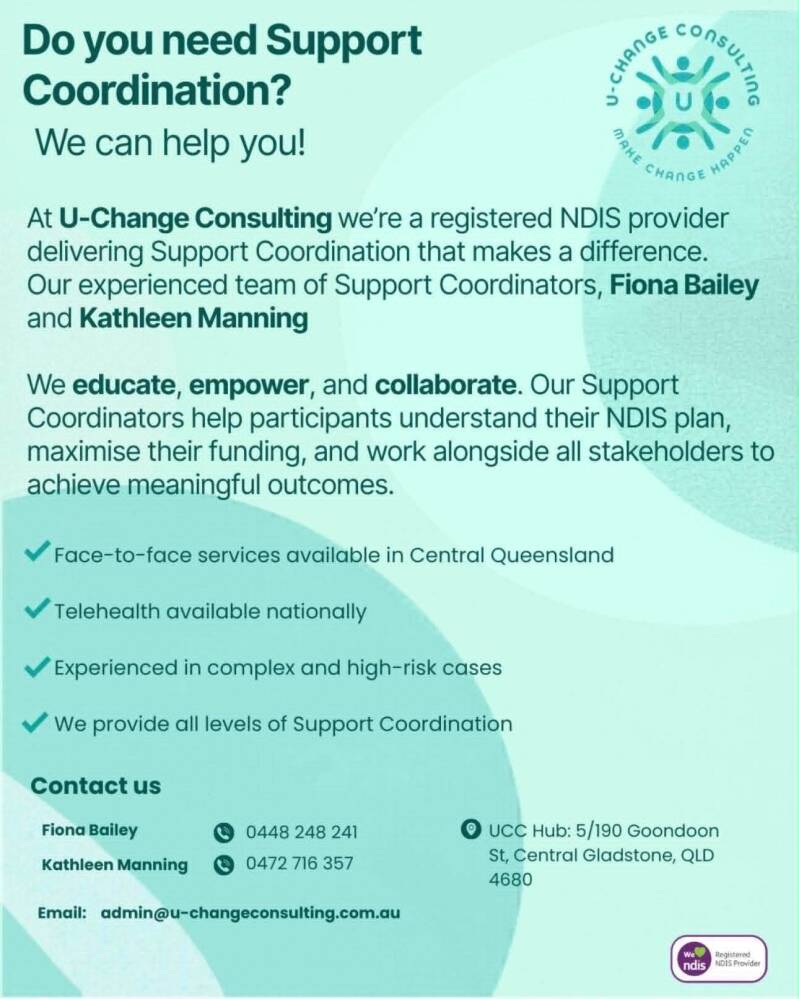
The two images sit beside each other like a split screen of the modern disability sector.
On one side: the familiar NDIS service-provider brochure. Clinical. Coordinated. Risk-managed. The language of systems, funding, outcomes, and stakeholder navigation wrapped in calming teal gradients.
On the other: Ai watercolour wrapped in humanity. Neurodivergent-affirming language. Identity. Belonging. Safety. Sensory needs. Connection. “You are enough, always.”
And the question hanging between them is impossible to ignore:
How do these two things truly sit side by side?
Because community is noticing something happening across the disability sector right now. A kind of linguistic shape-shifting. Services that once spoke almost exclusively in the language of deficits, behaviours, intervention, compliance, goals, capacity building, and “risk” are increasingly adopting the vocabulary of the neurodiversity movement. Suddenly every organisation is:
neuro-affirming, trauma-informed, strengths-based, person-centred, culturally responsive, inclusive.
The words bloom everywhere like wildflowers after rain.
But community has learned to look beyond the flowers.
Many autistic and neurodivergent people are asking: What actually changed underneath?
Because neuro-affirming practice is not an aesthetic. It is not watercolour graphics. It is not infinity symbols. It is definitely not puzzle pieces. It is not replacing “challenging behaviour” with softer fonts. It is not placing “you are enough” beside systems still built on normalization, compliance, behavioural control, and institutional power.
And this is where the discomfort begins.
But before going further, I want to acknowledge the tension of writing this at all.
None of us who work, survive, advocate, or support within the disability sector stand outside these systems entirely. The NDIS itself is built upon particular frameworks of disability, risk, behaviour, functionality, independence, and intervention. Much of the sector still operates through models shaped by behavioural governance, compliance culture, PBS frameworks, ABA-informed assumptions, and medicalised understandings of neurodivergence, even where the language surrounding those practices has evolved.
That reality implicates all of us navigating this landscape.
Including me. Including GRANN.
It would be easy to write this critique as though neuro-affirming practice exists in a pure form somewhere beyond the reach of systems, funding structures, institutional pressures, or survival realities. But the truth is far messier. Many providers, workers, families, advocates, and even neurodivergent people themselves are trying to navigate systems that reward normalization, measurable outcomes, behavioural management, and institutional legibility.
And many organisations exist within contradictions.
Some are genuinely attempting to shift practice while still operating inside structures that constrain what is funded, recognised, or professionally legitimised. Others adopt neurodiversity language while leaving underlying assumptions untouched. Often both realities exist simultaneously.
This critique is therefore not written from a position of moral purity, but from a belief that community deserves honesty about these tensions.
Because neuro-affirming practice cannot simply become another layer of branding placed over systems that still fundamentally struggle to tolerate autistic autonomy, distress, difference, refusal, interdependence, non-compliance, or ways of being that fall outside neuronormative expectations.
If we are serious about neurodiversity, then we must also be serious about interrogating the systems, practices, incentives, and professional cultures we ourselves participate within.
So here I go…
The first flyer speaks the language of traditional disability service infrastructure:
maximise funding, achieve outcomes, complex and high-risk cases, stakeholder coordination.
The participant appears primarily as someone to be managed through systems.
The second poster speaks the language of liberation:
identity, belonging, self-advocacy, sensory understanding, emotional safety, thriving on your own terms.
But can these frameworks coexist without contradiction?
Or are we watching the rise of something many in community are beginning to recognise as neuro-washing?
The appropriation of neurodiversity language while retaining the same underlying assumptions, power structures, and practices.
This matters because language is never neutral. As Nick Walker reminds us, the neurodiversity paradigm is not simply about being nicer to autistic people. It is a fundamental shift away from viewing neurodivergence as pathology requiring normalization. It asks us to see autistic ways of being as fully human variations, not defective approximations of neuronormativity.
That shift cannot happen if organisations continue to operate from frameworks rooted in:
compliance, behavioural modification, functioning labels, coercive “independence” goals, or professional authority overriding lived experience.
And this is where many autistic advocates become deeply uneasy when services market themselves as neuro-affirming while still participating in models shaped by ABA and PBS cultures.
Because regardless of how softly it is framed, autistic community has lived experience of what happens when support becomes contingent on appearing acceptable, regulated, productive, or socially compliant.
Community knows what it feels like to have:
distress reframed as behaviour, autonomy reframed as non-compliance, sensory overwhelm reframed as dysregulation, communication differences reframed as deficits, survival strategies reframed as maladaptive.
No number of watercolour leaves can soften that reality.
Robert Chapman’s work is important here because he situates these systems within broader structures of capitalism and normalisation. Neurodivergent people are often supported only insofar as they can be rendered functional within existing systems. The language changes, but the expectation frequently remains: be employable, be manageable, be independent, be productive, be appropriate.
Even the newer language of “thriving” can sometimes conceal an old demand: be closer to normal.
And autistic community notices when “person-centred” still somehow leads to the same socially sanctioned destination every time.
This is why authentic neuro-affirming practice requires more than branding. It requires organisations to interrogate themselves at a structural level.
Not: "How do we sound affirming?”
But: How do we respond to refusal? How do we hold power? What happens when an autistic person says no? Do we honour non-speaking communication? Do we support unmasking? Do we accept interdependence rather than forcing independence? Do we view distress as communication or non-compliance? Are autistic people shaping practice at leadership levels? Are lived experiences respected equally in conjunction with professional qualifications? Are we willing to abandon practices that community says are harmful, even if the sector still rewards them?
Because community can tell the difference between inclusion and assimilation.
One says: “You belong here as you are.”
The other says: “You are welcome here once your differences become manageable.”
Those are not the same thing.
And perhaps that is the deepest tension between these two images. One appears rooted in the service-provider world of coordination, outcomes, and systems navigation. The other gestures toward something much more relational, human, and liberatory.
But if the structures underneath remain unchanged, the second image risks becoming a mask worn by the first.
A neurodiversity repaint over old architecture.
And community is tired. Tired of watching affirming language become market currency while autistic people continue fighting for:
communication autonomy, sensory safety, informed consent, freedom from coercion, genuine collaboration, and the right to exist without constant behavioural interpretation.
So perhaps the question is not whether providers can use neurodiversity language.
The question is whether they are willing to live it when it becomes inconvenient, unprofitable, or challenges the foundations of the systems they operate within.
Because if not, what remains is not affirmation.
It is branding.
And community deserves more than branding.
So we want to ask the community directly:
Are you seeing this shift in your own services? Have your providers genuinely changed practice, or mainly changed language? What does authentic neuro-affirming support actually look like to you? And if not the truth, what do providers think community is asking for?
Because phrases like “Neurodiversity does not define you” coming from within a sector still deeply shaped by behavioural compliance models, normalization frameworks, ABA legacies, and PBS governance set off alarm bells in autistic community.
Not because we reject compassion.
But because we have learned to listen carefully to what sits underneath the language.
Too often, what sounds affirming on the surface still carries an old discomfort with autistic ways of being underneath it. A quiet insistence that our neurodivergence must somehow be separated from us before we can be seen as fully human. Fully worthy. Fully welcome.
But neurodivergence is not a detachable shell wrapped around a “real person” hidden underneath.
It is part of how we think. How we feel. How we communicate. How we experience joy, distress, connection, overwhelm, creativity, safety, love, and meaning.
And community is asking harder questions now.
When providers say “you are enough”, do they still require compliance for support? When they say “person-centred”, what happens when an autistic person refuses? When they say “affirming”, are they willing to relinquish power? When they celebrate neurodiversity, do they actually tolerate autistic difference once it becomes inconvenient, complex, visible, unsupported, or socially uncomfortable?
Because autistic people have become fluent in the dialect of institutional reassurance.
We know how easily liberation language can be placed over systems that still reward masking, normalization, behavioural conformity, and professional control.
And that is why these images matter.
Not because they are uniquely harmful. But because they reveal a wider shift happening across the disability sector: the rapid adoption of neurodiversity language without always confronting the systems and assumptions underneath it.
Community is not asking for perfect providers.
We are asking for honesty.
Honesty about power. Honesty about coercion. Honesty about behaviourism. Honesty about the limits of systems built on normalisation. Honesty about where services are still learning. Honesty about whether neuro-affirming practice is structural, or simply aesthetic.
Because autistic people do not need prettier pathways into the same old systems.
We need spaces where our humanity is not conditional.

Add comment
Comments